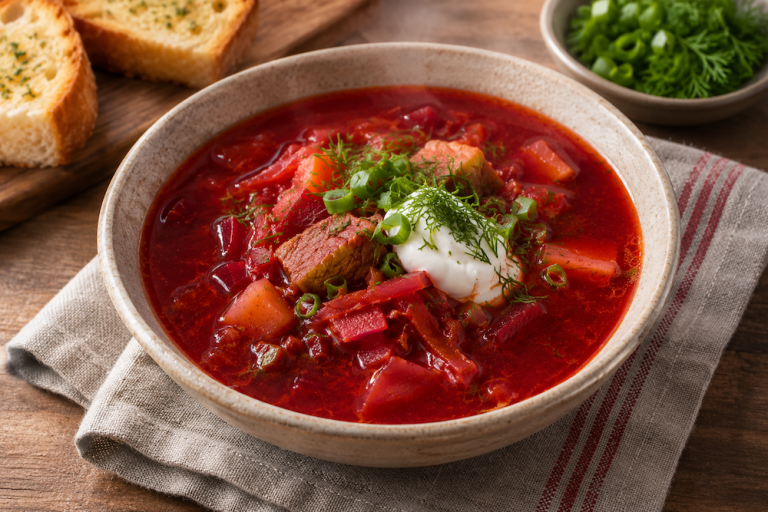
Aleksandra Hoshi makes chocolate for a living — Japanese ingredients, French technique, her own thing entirely. We asked what she eats when she wants her skin to behave. She didn’t name a supplement. She named borshch, the soup she grew up on in Ukraine.
borshch is a pot of vegetables that cooks down for an hour and comes out dark red. Here’s how Aleksandra makes it at home, and what’s good for your skin.
Real Ukrainian borshch
You know it by the deep ruby color — nothing else looks like it — and by the way your kitchen smells in about an hour. Ukrainian families have been making borshch forever, and no two versions match. Some skip the meat entirely. Some go with beef.
Aleksandra’s recipe is fully loaded: pork, beets, tomatoes, potatoes, cabbage, red kidney beans. All the ingredients are cooked into the soup while keeping a little bit of texture, which is what keeps your spoon asking for more.
In Ukraine, this is what you cook for loved ones. Here’s how.
Ingredients
For the soup
| Pork loin or tenderloin, cut into bite-sized cubes | 2–3 lb (900 g–1.36 kg) |
|---|---|
| Filtered water | 8 cups (2 liters) |
| Raw beets, peeled and grated, or precooked beets | 9 oz (250 g) |
| Russet potatoes, peeled and cubed | 1 lb (450 g) |
| Yellow onion, diced | 1 large |
| Sunflower oil, divided | 1/3 cup (80 ml) for the vegetables, plus 1 Tbsp for the pork |
| Carrot, grated or cut into fine julienne strips | 1 large |
| Tomato purée or Italian passata | 24 oz (680 g) |
| Tomatoes, chopped | 5 fresh, or one 28-oz (800 g) can |
| Cabbage, finely shredded | about 1/2 medium head |
| Red kidney beans, drained and rinsed | 1 can* |
| Bay leaf | 1 |
For serving
| Sour cream or plain yogurt | to taste |
|---|---|
| Fresh dill, parsley, or green onions | optional |
| Garlic bread | to serve |
How to make it
1. Prepare the ingredients
Peel and cube the potatoes, dice the onion, grate the carrot, and finely shred the cabbage. Peel and grate the beets, keeping them separate from the other vegetables.
Cut the pork into evenly sized cubes so that it cooks uniformly. Prepare the tomatoes and garlic, and drain and rinse the kidney beans if using canned beans.
Having all the ingredients ready before cooking makes the process easier and helps each ingredient go into the pot at the right time.
2. Sauté the vegetables
Heat about 1/3 cup (80 ml) of sunflower oil in a large, heavy-bottomed soup pot over medium heat. Add the potatoes, diced onion, and carrot. Adjust to taste — vegetables soak up the oil, especially carrots and onions.
Sauté, stirring occasionally, until the onion softens and the potatoes begin to cook but are not yet completely tender. The vegetables will continue cooking in the broth, absorbing the flavors of the meat and seasonings.
3. Cook the pork
Meanwhile, heat a large skillet or wok over medium heat and add approximately 1 tablespoon of sunflower oil.
Add the pork cubes and season generously with freshly ground black pepper. Cook, turning occasionally, until the pork is browned on the outside and cooked through.
Transfer the pork to the soup pot with the vegetables. If excess fat or foam develops, skim it from the surface as needed to keep the broth clean-tasting.
4. Add the garlic and spices
Add the garlic powder, chopped fresh garlic, onion powder, ground coriander, paprika, white pepper if using, dried oregano if desired, and bay leaf to the pot.
Stir well to distribute the seasonings throughout the pork and vegetables. Allow the garlic and spices to warm briefly, taking care not to let the garlic burn.
Using both garlic powder and fresh garlic creates a deeper, more layered flavor. The powder seasons the soup throughout, while the fresh garlic contributes a fragrant aroma. Ground coriander and paprika add warmth and complexity.
5. Simmer the soup
Pour the water into the pot and add the shredded cabbage. Stir gently to combine.
Bring the soup to a boil, then reduce the heat to low. Cover partially and simmer for approximately 40 minutes, stirring occasionally, until the pork is tender and the vegetables have softened.
Maintain a gentle simmer rather than a vigorous boil. This allows the ingredients to release their flavors gradually and gives the broth a fuller taste.
6. Add the tomatoes
Stir in the tomato purée or passata and the chopped tomatoes. Add the chicken bouillon paste and stir until it dissolves completely.
Bring the soup back to a gentle boil, then allow it to simmer briefly so that the tomato flavors blend with the pork, cabbage, and spices.
Taste the broth and adjust the salt as needed. The tomatoes provide acidity and sweetness, while the bouillon adds savory depth.
7. Add the beets and balance the flavor
Add the 250 g of grated beets, followed by the vinegar and sugar. Stir gently and simmer for another 10 minutes, allowing the beets to soften and release their rich color into the broth.
This stage gives borshch its distinctive ruby-red appearance. The vinegar helps brighten the color and adds a pleasant tang, while the sugar balances the acidity of the tomatoes and the earthy sweetness of the beets.
Begin with the smaller amounts of vinegar and sugar, then taste and adjust according to your preference. If using precooked beets, add them toward the end of cooking to avoid overcooking them.
8. Add the beans and finish the soup
Add the drained kidney beans and bring the soup back to a gentle boil. Simmer briefly until the beans are heated through and their flavor has blended with the broth.
Taste the soup and make any final adjustments to the salt, pepper, vinegar, sugar, or spices. Add chili flakes if you enjoy a little heat.
Remove the bay leaf before serving. Allow the soup to rest for a few minutes so the flavors can settle together.
9. Serve
Ladle the hot borshch into deep bowls. Finish each serving with a generous spoonful of sour cream or plain yogurt and, if desired, a sprinkling of freshly chopped dill, parsley, or green onions.
Serve with garlic bread to accompany the rich, flavorful broth.
The finished soup should be vibrant in color, with tender pork, soft potatoes, sweet cabbage, and a satisfying mixture of vegetables and beans. Each spoonful brings together earthy, savory, sweet, and gently tangy flavors.
Getting it right
Aleksandra’s take: the sour cream is doing a job, not decorating. It rounds off the acidity coming from the tomatoes. The dill and green onion go on for the color and for the way it hits you when you lift the bowl.
Pay attention to the spices. Coriander and paprika are what you smell; garlic is what you taste underneath everything. The vinegar sharpens the pot up and the sugar settles the tomato’s acidity against the sweetness coming off the beets. Add both in small amounts, keep tasting, stop when you like it.
If you can, make it the day before. It’s better on day two — all the ingredients have time to settle into each other. Reheat, then add the sour cream and fresh herbs.
What the vegetables are doing for your skin
The other reason to eat this: there’s a lot going on in that pot. Vitamins, plant compounds, and the pigments that give each vegetable its color.
Two groups are worth singling out — the compounds behind all that red, and the nutrients tied to keeping skin and mucous membranes healthy. Quick tour.
Beets — antioxidants hidden in the red
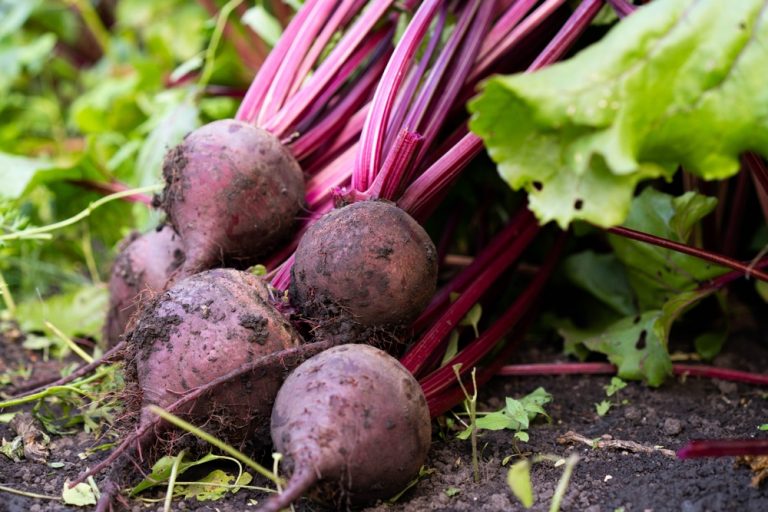
Beets are what make borshch, borshch. That deep red-purple comes from a family of natural pigments called betalains.
Studies have found antioxidant activity in betalains, which is why they come up whenever free radicals do. Your body needs some free radicals — they do real work. Too many, and you get oxidative stress on your cells, and oxidative stress is part of how skin ages. That connection is the reason betalains are worth paying attention to at all.
Beets also bring folate and potassium. Not a bad return from one vegetable — reason enough to keep them in the rotation for your skin and the rest of you.
Tomatoes — lycopene, for skin that holds up to UV
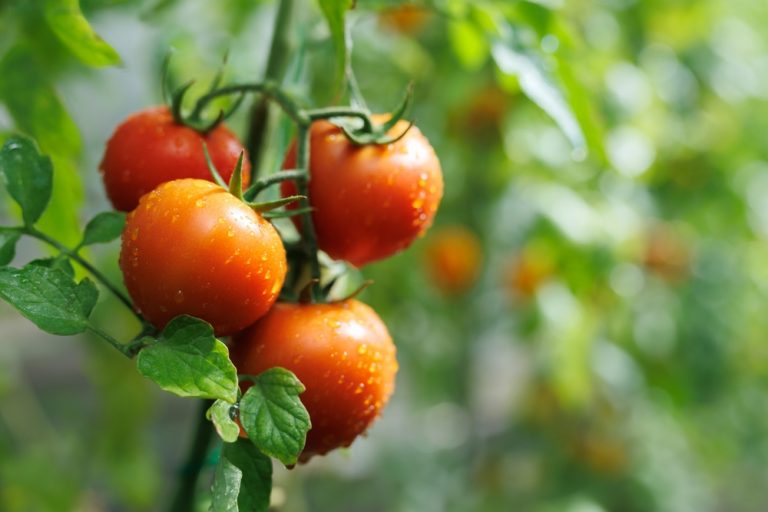
Lycopene is what turns a tomato red. It’s a carotenoid, and it’s a strong antioxidant — that part is well established. What researchers are still working out is its relationship with UV damage to skin. The expectation is that it helps hold down oxidative stress there, which makes it one to get into your diet regularly if healthy skin is the goal.
Lycopene is also fat-soluble, meaning your body absorbs it far better alongside oil. Borshch simmers tomatoes together with vegetables you already sautéed in oil. Nobody planned it that way, but the cooking method is doing some of the work for you.
Carrots — beta-carotene, for skin and mucous membranes
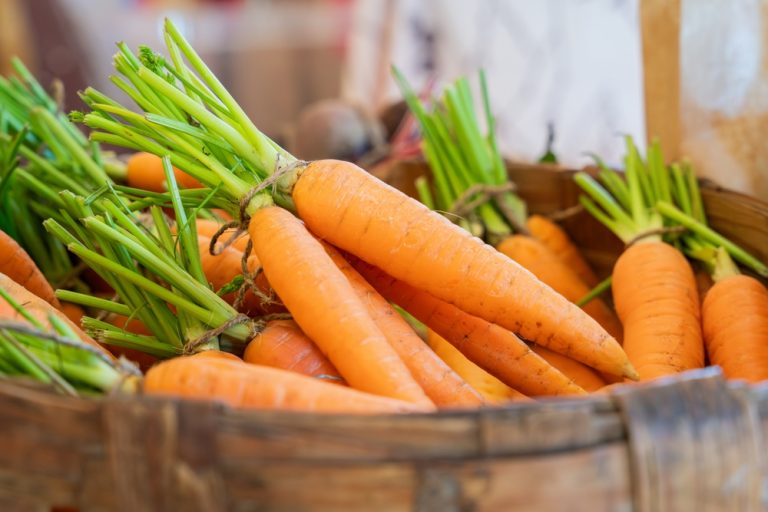
Carrots are orange because of beta-carotene. It’s a provitamin A, which means your body converts it into vitamin A on demand, as much as it needs and no more.
Vitamin A is an essential nutrient for keeping skin and mucous membranes normal. It’s involved in how the cells at the surface of your skin do their job, which puts it at the center of keeping skin in good shape.
Beta-carotene is fat-soluble too, which puts it in the same camp as lycopene — it wants oil. Aleksandra sautés the carrots before they go into the simmer, and you end up taking it in alongside every other vegetable in the pot without doing anything extra.
Cabbage — vitamin C, which you need for collagen
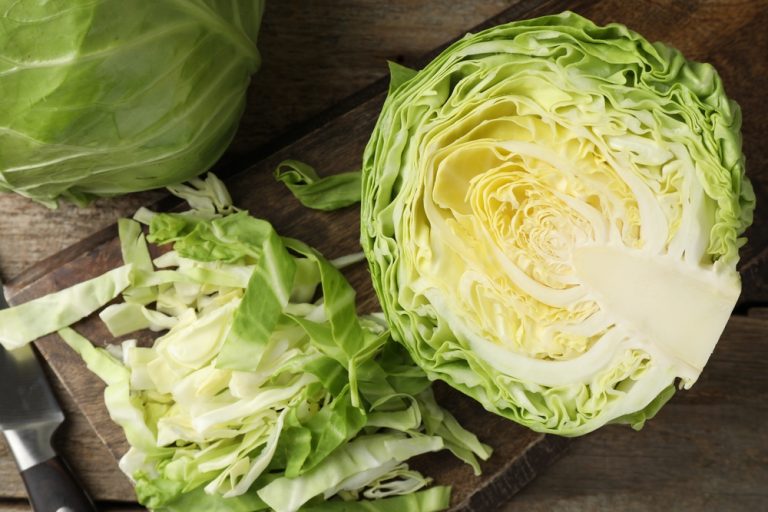
Vitamin C is the headline nutrient in cabbage.
Your body can’t produce collagen without it, and collagen is what holds skin firm and springy. Vitamin C is an antioxidant in its own right too, with a hand in protecting cells from oxidative stress.
It’s water-soluble, which is normally how you lose it — straight down the drain with the cooking water. A soup fixes that. Whatever leaches into the broth, you’re eating anyway. Heat still destroys some of it, which is why raw vegetables and fruit earn a place in your week on top of this.
Onions — quercetin, a polyphenol
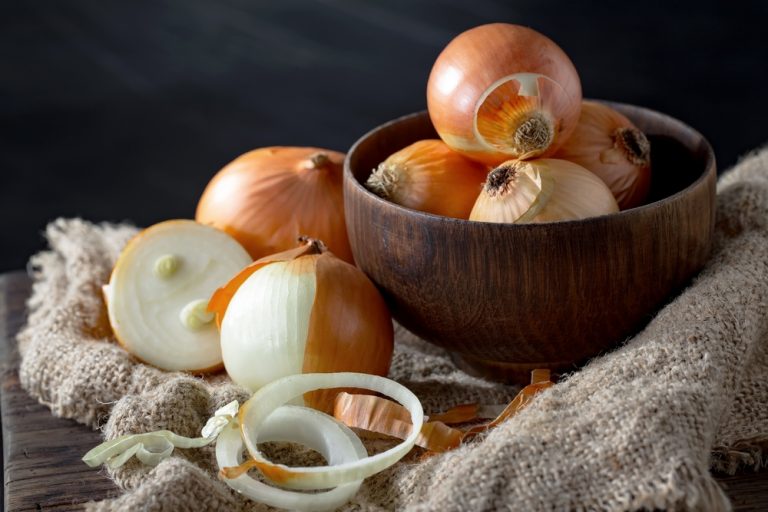
Onions carry quercetin, a polyphenol.
Quercetin gets studied for its antioxidant activity and for what it does around inflammation. Be straight about where that stands: how much it actually does for your skin at the amounts you’d get from ordinary meals isn’t clear yet. Take it as a bonus, not a reason.
What onions definitely do is give borshch its depth. And putting them in with this many other vegetables is what rounds out the nutrition across the whole meal.
Potatoes and beans, pulling their weight
Potatoes bring vitamin C and potassium. Red kidney beans bring plant protein and dietary fiber.
Protein is the raw material your body builds with, skin included. Fiber is what keeps your gut environment in order.
Borshch isn’t only vegetables. It’s vegetables plus meat plus beans, which is how one pot ends up covering this much ground at once.
Good skin starts at the table
You take care of your skin from the outside with skincare. Getting what your body needs out of what you eat every day matters just as much.
That doesn’t mean hunting down special ingredients for the sake of beauty. Ordinary vegetables, combined well, eaten often, with a decent spread of nutrients across them — that’s already a step toward better skin.
A warm pot of borshch, with the sweetness of the vegetables and the richness of the pork cooked all the way in. Make a big one tonight. Eat it with the people you love. Let dinner be part of your beauty routine.