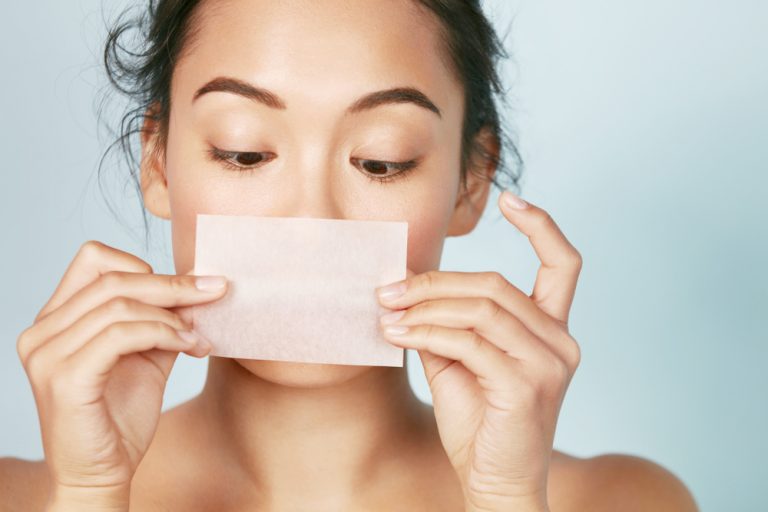
“I had pimples in high school, and now that I’m older it’s the shine that gets me.”
“I still can’t leave the house without blotting paper — is my skin going to be oily forever?”
Oily skin is dry skin’s opposite, and it only ever gets talked about for what’s wrong with it: the shine, the foundation sliding off by lunch. Nobody mentions the upside — you’re less likely to get wrinkles. As skin ages, oil turns out to be more friend than enemy. Learn to work with it and you’ll get along fine.
Four skin types. Are you actually oily?
Normal, dry, oily, dry-oily. The split comes down to two things: how much water your skin holds, and how much oil sits on top of it.
Nothing you do will work unless it matches your type. Start here. (Sensitive skin is its own category — that’s about reacting to specific ingredients, not about water and oil — and we’ll leave it out.)
| Less oil | More oil | |
|---|---|---|
| More water |
Normal
Healthy. Not much goes wrong.
|
Oily
Hydrated, but shiny by afternoon.
|
| Less water |
Dry
Flaky, and irritated by almost anything.
|
Dry-oily
Greasy and flaky at once. Breaks out from dryness.
|
Normal
Enough water, the right amount of oil, nothing fighting. Few breakouts, no tightness. It’s the boring one, and it’s the one everybody wants.
Dry
Short on both water and oil, and the most common type in Japan. A weakened barrier lets water escape, fine lines show up early, and the skin gets irritated by almost anything.
Oily
The far end from dry: plenty of water, plenty of oil. There’s no magic number where you officially become oily — you just know, because you shine and your face feels tacky by afternoon.
The upside is toughness; oily skin handles irritation well.The downside is makeup that won’t stay put, pores that stretch and clog and darken, and breakouts that keep coming back.
One thing to watch for: combination skin, where dry patches and oily patches share a face. The classic version is a slick T-zone with dry cheeks and jawline, though plenty of people are shiny around the nose and tight across the forehead.
Dry and oily absolutely can coexist. When the shiny zone gets big enough, combination skin passes for oily — it isn’t.
Dry-oily
Your skin has worked out that it’s short on water, and it’s pumping oil to keep what’s left from evaporating.
The shine fools everyone, including you. The problem isn’t the oil, it’s the water you don’t have. And every blotting sheet and squeaky-clean cleanser makes the oil work harder.You’ll also see this one called inner dry, or hidden dry skin.
The good news and the bad news

Good news first. Oily skin gets a bad rap — the shine, the tackiness, the makeup breaking down, the clogged pores.
But that layer of oil keeps water from evaporating, which means wrinkles take longer to show. Dryness is one of the biggest causes of lines, and you’ve got built-in insurance against it. You’re also not producing what you did at 22. Put those together and oily skin in your forties often just reads as glow.
Now the bad news. Oil that sits on your face oxidizes. Oxidized oil generates the free radicals behind aging, and it drags a long list of other problems along with it.
Once it hardens inside a pore, your whole face starts to look dull. An upside is not a reason to ignore it.
Blame testosterone
You need oil. It holds water in and keeps irritants out. What decides how much you make is testosterone.
Men are more or less stuck with oily skin, but women aren’t off the hook — the ovaries and the adrenal glands make testosterone too. It’s also a hormone that reacts fast to how you live and how stressed you are.
Oily skin runs in families, sure. What makes it worse is diet, stress, and the wrong products. Any of that sound familiar?
What’s making it worse
Greasy food

Eat a lot of fat, make a lot of oil. Heavy on fatty meat, fried snacks and fast food, and your skin will show it.
The one nobody expects is sugar. A blood sugar spike releases insulin, insulin pokes your oil glands, and off you go.
That puts high-GI food on the list too: white flour, white rice, packaged bread and pasta, and obviously cake and cookies.
Stress
Male hormones drive oil, and stress drives male hormones.
When you can’t come down and your nervous system stays switched on, they climb. Your adrenal glands pitch in as well.
Lack of Sleep

Skip sleep and your skin’s turnover cycle falls out of rhythm. The barrier weakens. And your skin’s answer to a weak barrier is more oil.
The wrong products
If you live reasonably well and you’re still shiny, look at what you’re putting on your face. Washing hard to strip the oil off.
Using nothing but oil-free products that leave you squeaky. Blotting constantly and thoroughly. All of it works for about an hour.Worse, harsh washing damages the barrier, and a damaged barrier makes more oil than you started with.
Three rules for oily skin
1. Stop stripping it
Scrubbing because you hate the oil makes more oil. Wash gently. Never set out to get all of it off — you can’t, and trying makes it worse.
If you’re going through three blotting sheets in one sitting, that’s how oily skin turns into dry-oily skin.
2. Take another look at your cleanser
How does your face feel after you wash it? Clean but a little tight means it’s too strong.You want one that leaves behind the water and the oil you actually need. How you wash counts too — put the face brush down, and stop scrubbing with a towel.
A clay cleanser, which pulls dirt and dead skin out of pores instead of scouring them, is a good fit for oily skin.
3. Moisturize anyway
Always moisturize after you wash. Making oil is not the same as being hydrated — those are two different things, and the water has to go back in.The stratum corneum holds roughly 20% water in your twenties and about 10% by your forties. Obsessing over oil while skipping moisture has it exactly backwards.
Oily skin is sturdy to start with; take care of it and it holds up. The oil film takes two to three hours to rebuild even on oily skin.
A little cream on top keeps the water you just added from walking straight back out.
Four things to change outside the bathroom
1. Eat a little less of the greasy stuff
Fat is the thing to watch. But a diet made of rules turns into stress, which brings you right back to the oil.
Get the soba instead of the burger. Put vegetables on the plate. Dodge the blood-sugar spikes where you can. Start with whatever you’ll actually do. What you want more of is vitamins.
✓ B2 — eggs, dairy, natto, pork. Helps skin cells regenerate and protects mucous membranes.
✓ B6 — liver, chicken breast, mackerel, wheat germ, brown rice. Strengthens the barrier and helps keep breakouts down.
✓ A (beta-carotene) — broccoli, carrots, squash and other dark vegetables. Protects skin, supports metabolism, keeps skin firm and hydrated.
✓ C — strawberries, citrus, potatoes. You need it to build collagen, and it takes the edge off stress.
✓ E — almonds, peanuts, avocado. Improves circulation and evens out texture.
2. Find your own way to blow off steam

Keeping oil in check means keeping stress in check. Sleep is the one that works for everybody — start there. After that it depends on how stress lands on you.
Some people feel it in their body, some get low, some get short-tempered. Carve out time to actually relax: a bath, a walk, slow breathing. Move a little. Change the scenery. Give yourself credit for what you got done. And if you’re a karaoke person, go sing.
3. One blotting sheet at a time
Blotting paper pulls oil off fast. People will tell you it’s bad for your skin or that it takes too much — used right, it’s genuinely useful.
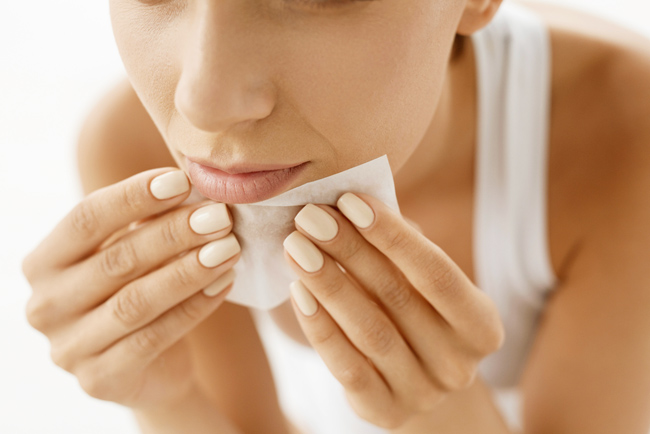
The rule is one sheet. Lay it on, press gently with a finger, let it lift what you don’t need. On your cheeks, which dry out faster, only reach for it when the tackiness is actually bothering you.
4. Go lighter on makeup
Put a heavy, oil-rich foundation on oily skin and the two oils mix into something closer to slurry by noon.
Go as low-oil as you can with base makeup. Powder is the pick — especially the formulas with oil-control ingredients, which absorb the excess and keep the shine down. They stay put better, too.
If coverage matters more to you — pores, dark spots, acne scars — cream or liquid will serve you better. And if you break out easily, mineral foundation is worth a look.
No water, no oil, just ground minerals, and it sits light on the skin.
Turn the shine into a glow
A lot of people fight acne in their twenties and then find, somewhere in their forties, that the lines never really showed up and oily skin wasn’t the curse they took it for.
Hydration is the whole foundation. And the good news is that oily skin with enough water in it responds fast — it’s one of the easiest types to turn around. Treat it right and the shine starts reading as glow.
What we’d reach for