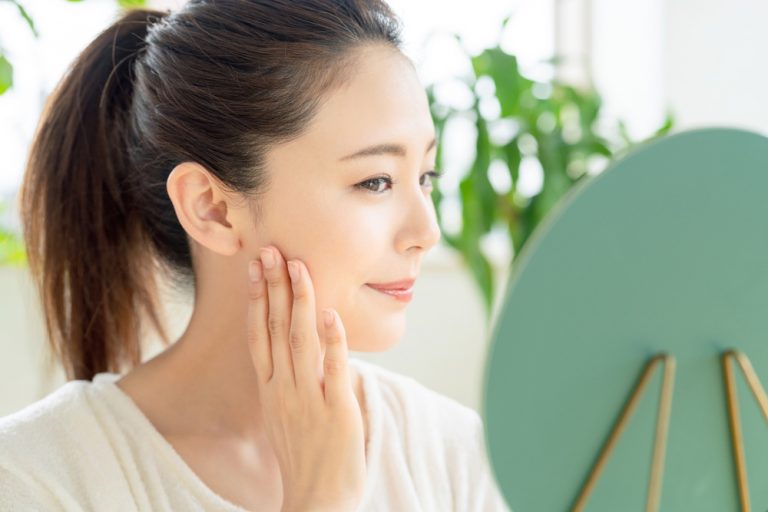
There are around 200,000 pores on your face. That number is essentially fixed from the day you were born — it does not go up. And yet they seem to multiply or at least become impossible to ignore. Getting to pore-less skin starts where most people skip identifying which kind of pores you have. Here are the 4 points that will get you there.
Point 1: There are three types of pores. Find yours first.
Just like dark spots pop up in different types, so do pores. Start in front of a mirror and look. Tons of people never identified their pore type, end up doing the wrong skincare for their problem. It may not be a pleasant exercise, but under a magnifying mirror the difference is obvious. Note, more than one type can be present at once.
Type 1 — Round and open: "open pores"
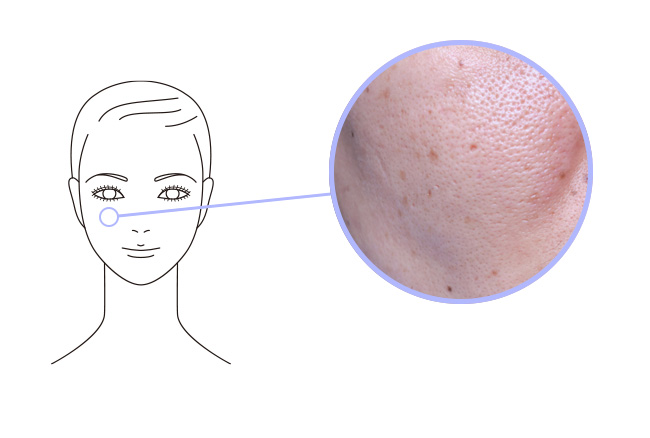
Most common on the cheeks and nose. The cause is excess sebum. Sebum is produced in glands deep inside the pore, and the only way out is through the opening — when sebum production runs high, the pore widens. Even if your skin is not oily, sebum output climbs from puberty and peaks in early twenties. It varies by person. When did you start noticing your pores?
After 30, more people report the opposite problem: dry skin, and pores they suddenly can’t unsee. When skin goes without enough water for a long time, it over-produces sebum to stop the moisture evaporating. Pores also sit in the dips between the skin’s texture. When skin deflates from lack of moisture, the pores are more noticeable.
Type 2 — Bumpy and rough: "clogged pores"
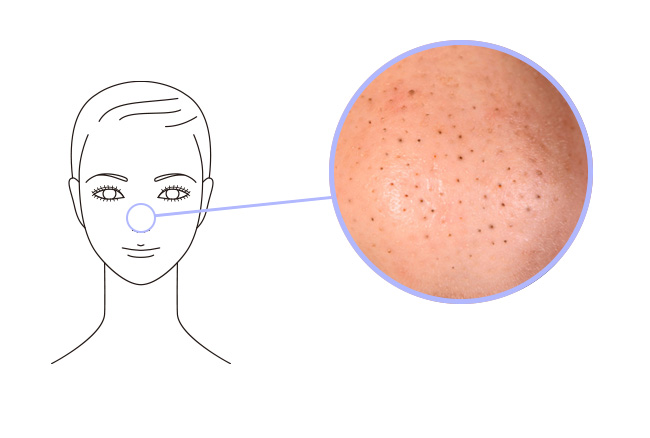
Sebum mixes with old dead skin to form a plug that sits in the pore. It shows up most in the T-zone and on the chin, where sebum is heaviest. The plugs start out white, then oxidize on contact with air and turn into dark dots. That rough, gritty feel is the plug pushing up out of the pore. You may know this one by its other name: strawberry nose.
Type 3 — Oval or teardrop: "sagging pores"
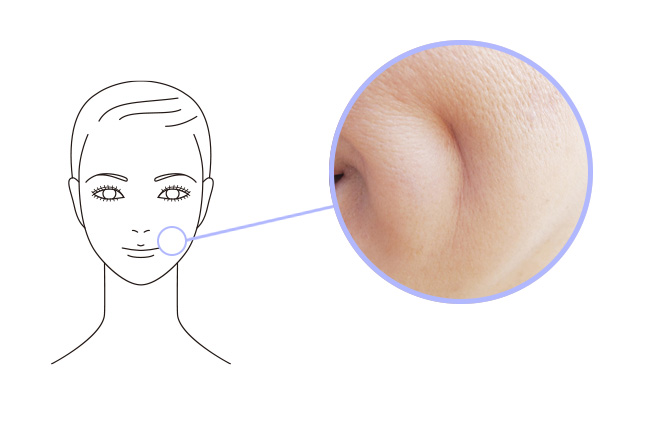
Here is the test: pull the skin at your temple. If the pores on your cheek disappear, this is your type. It appears on the inner cheek as the skin loosens. A round open pore stretches into an oval, and as age takes the firmness out of the skin, the oval pulls into a teardrop. These are pores that lost the battle to gravity.
Did you find your type? Pore trouble usually begins as Type 1 and then branches into, or mixes with, the others — which is when it really starts to become noticeable. Different types need different care. Keep in mind as you read on that the wrong pore care itself is a reason pores get wider.
Point 2: The first step is stopping what makes them worse.
Open pores
Does this sound like you?
- You rinse with hot water, or straight from the shower.
- Your skin feels greasy, so you go easy on how much product you use — especially if you have oily skin.
Then change it to this:
- Rinse thoroughly with lukewarm water, 89.6°F ~ 91.4°F (32–33°C).
- Re-check the correct amount for each product.
The habit that slips past everyone is rinsing at bath temperature — 107.6°F. / 42°C or above — on the grounds that it can’t do much harm. But anything above body temperature is hot water as far as your skin is concerned.
It does not only strip too much sebum; it washes out the ceramides and other natural moisturizing factors (NMF) your skin needs to hold on to water.
Ceramides and NMF are necessary regardless of skin type. And adult oily skin is very often oily because it is short of water — the skin producing sebum to hold moisture in. Slightly over-protective is the right level of moisturizing.
Clogged pores
Does this sound like you?
- The dirt and plugs bother you, so you scrub.
- You push plugs out with your nails or tweezers or use pore strips often.
- In the morning you just rinse.
Then change it to this:
- Hold a hot towel to the skin for about 20 seconds before cleansing, to open the pores. This one step lifts the dirt out far more easily.
- Deal with plugs through skincare, not force.
- Use a proper amount of cleanser morning and night, work it in small gentle circles with your fingertips to float the dirt, then rinse thoroughly.
Left alone, plugs shed naturally along with the skin’s turnover.
Two things stop shedding naturally from happening. The first is makeup that was never fully removed, getting in the way. The second is forcing the plugs out.
When you strip them off with a nail or a pore strip, the skin reads the situation as “not enough sebum” and sets about making more dead skin and more sebum.
Some people say removing plugs is so satisfying they can’t stop — but that is the very act that makes pores stand out, and all it does is make them fill up faster.
Sagging pores
Does this sound like you?
- You use more pressure than you mean to, with both makeup and skincare.
- You don’t do much about UV outside of summer.
Then change it to this:
- Be deliberately gentle with both makeup and skincare. Making massage a habit works.
- Protect against UV all year round.
Point 3: What to actually do — shared care, then care by type

For all three types
- Work in this order: cleanse → lotion → serum → gel or cream.
Pores have more to do with the impression you make than people realize.
You can be well dressed, but if the pores are dark or the chin feels gritty, the impression is of someone unclean. And when the pores on the cheek have slackened into teardrops, what people read is tiredness. The basis of pore care is the same whatever your type: do not let dirt sit in the pore.
Lift it away with a gentle touch and rinse with lukewarm water. If you are the clogged type, twenty seconds of hot towel before cleansing makes a real difference to how much comes out.
Then don’t ration your lotion. Hydrate properly and seal it in with a gel or a cream. That sequence is shared by all three types.
If your skin is oily and clogs easily, adding a clay-based mask that binds and lifts away excess sebum and dirt is worth doing — skin clarity improves as well.
- The pore ingredient you can rely on is vitamin C.
Many great products are sold for pore care, but it is no exaggeration to call vitamin C the most effective ingredient — and it works for all three pore types.
As with any cosmetic, though, it will not produce a dramatic result overnight.
What matters is staying consistent until you feel the difference. Look for it in the form of a vitamin C derivative, which stabilizes a vitamin that is otherwise unstable and quick to oxidize, and improves how well it gets into the skin.
Where certain types need one more step
Darkened pores are, despite appearances, a pigmentation problem rather than a pore problem. Vitamin C can be expected to help with brightening, and it is worth adding a cream.
This type also needs sunscreen applied properly, since UV is the single biggest driver of melanin.
Sagging pores, on the other hand, need care that builds elastic skin rather than care aimed at the pore itself. A lift massage using a massage serum, for example. There is a reason every salon treatment includes massage: it works.
Worth doing for anyone bothered by nasolabial folds, too. Finish with a moisturizing cream and wear sunscreen during the day. UV-A, the cause of the sagging, is almost as strong in winter and on cloudy days as it is in summer. This is year-round work.
Point 4: Three things that decide whether your products work at all
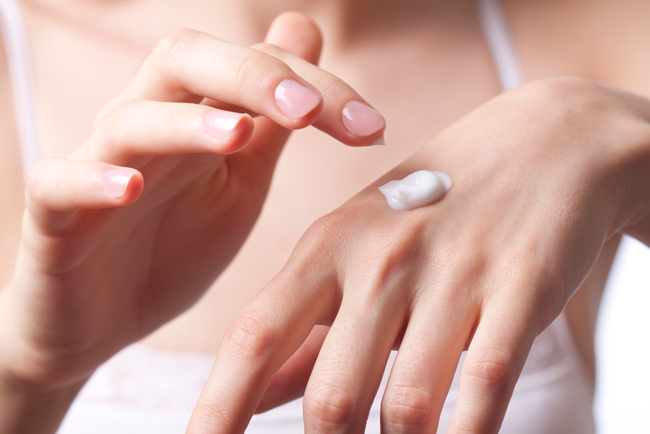
The trap with skincare is that you’re satisfied simply because you are using them. Active ingredients only do anything once they reach the skin. Skincare that sits loosely on the surface is a waste of what you pay for. It needs to soak inside the skin.
1. Don’t ration. Use the amount the product was built for.
Skincare products are developed to perform at a specific amount. Using the quantity given in the instructions is how you get the result they were designed to give. Here are the general reference amounts — hold your hand up and check yours against them. The rule is not to hold back because it feels wasteful.
✓ 1” or 3 cm across — QuSome Lotion and similar
✓ 0.8” or 2 cm across — C serum and similar
✓ One pearl, 0.3” or 8 mm across — QuSome Retino A and similar
✓ One to two pearls, 0.4” or 1 cm across — QuSome Moisture Rich Cream and similar
2. Don’t turn it into a duty. Comfort matters more than you’d think.
Science is steadily making clear that mental stress affects the state of the skin. Under stress, skin temperature drops, and metabolic rhythm, water retention and barrier function all fall with it.
There is a world of difference between getting through your skincare as a chore and doing it relaxed. Care that feels good works on the brain’s happiness hormones.
3. Whatever you are applying, use a mirror.
Some people do their makeup in front of a mirror but their skincare without one. You can certainly apply products without looking. But checking as you go — is this even, am I pressing hard enough to be creating lines — is what turns applying into caring.
Would you be happy with an esthetician putting lotion and serum on your face without looking at it? Treat yourself as gently as you would want to be treated.
Pore care works when it matches your pore type
Pores come top of the list of skin concerns year after year. But a pore is an important piece of equipment — it is what produces the sebum your skin needs.
And from here, the number of them will not increase. Stop treating them as the enemy and start by working out which type you have. The care you have been diligently keeping up because you believed it was good for you may be making it worse.
With the right care for your type, you can reset towards pore-less skin with even texture.
Recommended for pore care
✓ Serum C serum
✓ Cleanser Clay Wash
✓ Massage serum QuSome Lift
✓ Cream QuSome Moisture Rich Cream
✓ Lotion QuSome Lotion
✓ Gel cream QuSome Moisture Gel Cream